.svg)



Introduction
The energy storage market is well-established and massive. Indeed, there are estimates it will reach $289 billion in spending in 2025.
And yet, despite its large size, navigating the commercialization and regulatory landscape can still be very difficult and confusing, especially for startups and other newcomers.
The culprit is rarely chemistry. Instead, founders discover—often too late—that overlapping safety codes can block site approval or spook insurers.
This guide is an energy storage systems compliance primer. It maps the core frameworks you must know—UL 9540, UL 1973, IEC 62619, NFPA 855, NEC Article 706, CE marking, and more—and shows why treating standards as design inputs accelerates fundraising, deployment, and customer trust.
Key Points
- Embed compliance from day one: many pilots stall at permitting because founders treat safety codes as an after-thought; designing to standards upfront speeds fundraising, approvals and insurer buy-in.
- Secure system-level UL 9540 certification—supported by UL 1973/IEC 62619 battery tests, UL 9540A thermal runaway data, NFPA 855 siting rules and NEC 706 wiring—to satisfy utilities, AHJs, and most commercial buyers.
- Use a dual-listing strategy and shared test data (e.g., UL 1973 + IEC 62619) to minimize certification budgets, and pair component listings with an overarching system listing to avoid integration gaps.
- We recommend a disciplined six-stage path (gap analysis → pre-compliance → formal tests → corrective actions → certification → factory audits); robust documentation, Hazard Mitigation Analysis, and fail-safe Battery Management System (BMS) logic cut months from timelines.
- Plan for global access early: CE marking in the EU, CSA in Canada and METI rules in Japan can leverage UL/IEC reports, but chemistry or design changes void prior certificates—proactive re-assessment keeps market options open.
Energy Storage Systems Compliance Primer: Why Standards Fuel Market Success
Meeting a standard (compliance) is not the same as earning a listing (certification). Compliance means your design satisfies the technical rules; certification means a third-party laboratory has verified and documented that fact. Both matter:
- Market access – Most utilities and commercial buyers require proof of UL 9540 certification before purchasing a battery energy storage system (Kite Compliance).
- Investor confidence – Hardware funds increasingly condition term sheets on a credible certification plan because failed tests can add months and millions to budget costs.
- Permitting speed – Authorities Having Jurisdiction (AHJs) lean on consensus standards—especially NFPA 855 and UL 9540—to make yes/no decisions quickly.
System-level vs component-level compliance
Energy storage systems (ESS) combine batteries, power electronics, thermal management, software, and enclosure. Component standards like UL 1973 (batteries) or IEC 62619 feed data into system-level frameworks such as UL 9540. If only the battery passes, but the enclosure wiring fails, you still cannot ship. Smart founders map both tiers from the start.
UL 9540: The Foundation of System-Level Safety
UL 9540 is the North American benchmark for “stationary energy storage systems.” It examines the entire solution, not just the battery pack. Major evaluation buckets include:
- Electrical safety: short-circuit, dielectrics, wiring gauge.
- Mechanical integrity: vibration, enclosure impact, ingress protection.
- Environmental durability: temperature cycling, humidity, corrosive atmosphere.
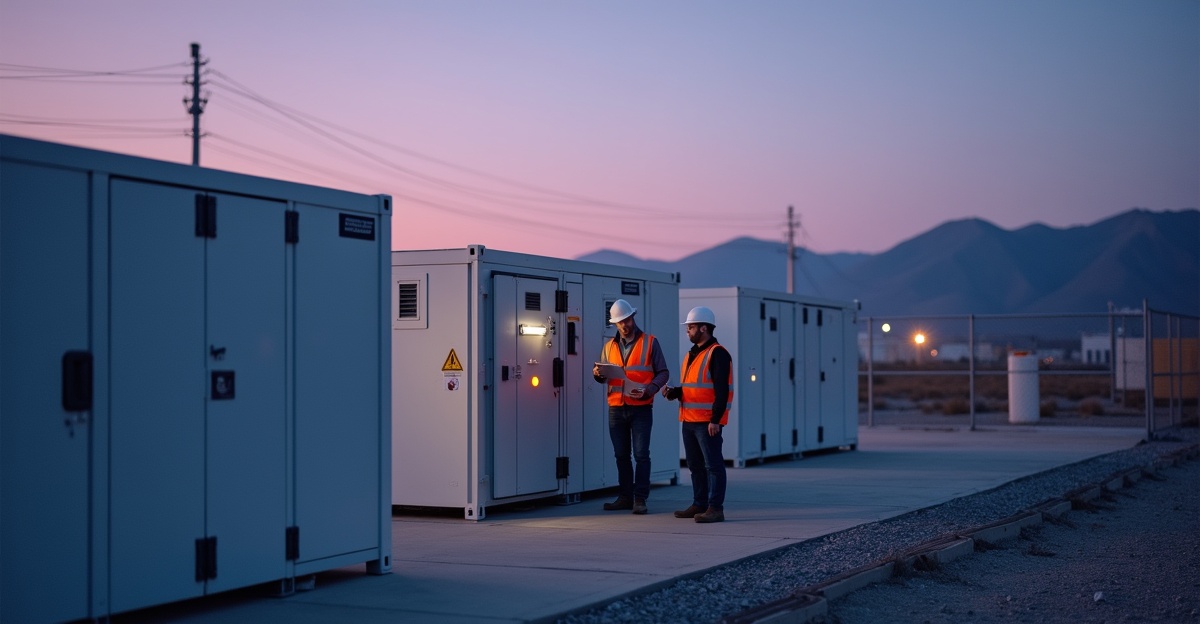
Because UL 9540 addresses interactions between subsystems, it catches hazards that single-component tests miss. UL and IEC have updated safety standards, and NFPA introduced comprehensive requirements for energy storage, fire safety and emergency planning in 2023 . The standard also cross-references NFPA 855 installation rules, so passing UL 9540 streamlines local approvals.
Passing either standard does not automatically grant the other, but labs can reuse test data to reduce cost. For U.S. startups, a “dual-listing” strategy—execute overlapping test sequences once, document to both protocols—can streamline certification and lower program costs (Kite Compliance AI).
UL 9540A Thermal Runaway Testing: Four-Level Method Explained
UL 9540A is a test method—not a certification—to quantify thermal runaway and fire-propagation risk. It proceeds in four escalating tiers:
- Cell level – Determines if a single cell vents flame or ejecta.
- Module level – Assesses propagation within a module.
- Unit level – Evaluates whether fire spreads to adjacent modules.
- Installation level – Measures gas release, heat flux, and explosion pressure inside the actual container or room.
Outputs include heat-release rate curves, gas composition, and maximum pressure rise. AHJs use this data to set ventilation rates, separation distances, and fire suppression specs.
For many projects, lab testing – including UL 9540/9540A certification – accounts for roughly 40% of total compliance spend (Kite Compliance AI), so scoping tests correctly is critical.
NFPA 855: Fire Code Requirements for Safe Installation
NFPA 855 (Standard for the Installation of Stationary Energy Storage Systems) translates lab results into field rules. Key mandates:
- Siting & setbacks – Minimum distances between ESS and occupied buildings.
- Maximum unit size – Often capped at 50 kWh for indoor lithium systems unless UL 9540A shows limited hazard .
- Fire suppression & gas detection – Clean agents, sprinklers, or proprietary vent systems must activate automatically.
- Emergency response planning – Site-specific procedures, firefighter training, and clear signage.
The 2019 McMicken, Arizona incident—where delayed venting caused an explosion harming eight firefighters—served as a wake-up call that emphasized the need for NFPA 855 provisions on size limits, ventilation, and emergency response planning .
NEC Article 706: Electrical Code Essentials for ESS
The National Electrical Code (NEC) is the U.S. bible for wiring safety. Article 706 adds ESS-specific directives:
- Circuit sizing – Conductors rated for maximum continuous output at 125%.
- Disconnects – Readily accessible, lockable, and labeled “Energy Storage System Disconnect.”
- Overcurrent protection – Fuses or breakers within the battery container when leads exceed 10 ft.
- Ground-fault detection – Required for systems over 50 Vdc in dwellings.
Residential ESS often fall under Parts I and II, while large utility-scale projects reference Parts III and IV. Early electrical-layout reviews against Article 706 prevent costly field rework.
Hazard Mitigation Analysis: Building a Proactive Safety Blueprint
A Hazard Mitigation Analysis (HMA) is a structured risk assessment demanded by NFPA 855 §4.1.4. The process:
- List credible failure modes—thermal runaway, software lockup, cooling loss.
- Rank each hazard by likelihood and severity.
- Map mitigations: detection, containment, ventilation, emergency shutoff.
- Document evidence (UL 9540A data, BMS specs) to prove effectiveness.
To view a live example, the 25 MW Arlington, Washington project used an HMA to justify alternative gas-handling technology and published it online here.
System-Level vs Component-Level Standards: Choosing the Right Scope
Should you test the whole container or just the battery rack? Consider:
- Integration risk – Different suppliers’ reports can conflict; a wiring error between certified parts can void listings.
- AHJ expectations – Many U.S. AHJs and fire departments are now requiring UL 9540 (or equivalent system-level testing) in addition to component certificates
- Time to market – Running module tests first can de-risk pack design while you finalize enclosure hardware.
Rule of thumb to consider: aim for component listings and an overarching system certification unless your product is a subassembly sold to other OEMs.
Battery Management Systems: Mandatory Safety Functions and Verification
A Battery Management System (BMS) is the electronics and firmware that supervise cell health. Safety-critical functions include:
- Cell balancing – Equalizes voltage to prevent overcharge.
- Thermal monitoring – Shuts down the pack if temperatures exceed limits.
- State of charge (SoC) accuracy – Avoids deep discharge that can trigger lithium plating.
- Fail-safe logic – Dual-path controls to disconnect if the primary microcontroller fails.
UL 1973 validates BMS response during simulated faults, while UL 9540 checks integration with contactors, HVAC, and fire suppression.
Testing and Certification Process: What Startups Should Expect
The testing and certification process typically unfolds in six stages:
- Gap analysis & quotation – Independent advisors review drawings against standards to scope cost.
- Sample preparation – Build test units with final firmware; last-minute design changes create costly retests.
- Pre-compliance trials – Optional, but catching failures early can save weeks.
- Formal testing – Batteries, fire propagation (UL 9540A), then full-system evaluation.
- Corrective actions – Address non-conformities; root causes must be fixed and verified, for instance as detailed under UL’s Customer Corrective Action Process
- Certification report & surveillance – Lab issues a certificate; annual factory inspections ensure continued conformity.
Cell certifications finish in 4–12 weeks, while full ESS approvals like UL 9540/9540A take much longer due to system-level fire testing (Kite Compliance AI). Early document hygiene—schematics, bills of materials, hazard analyses—cuts delays.
Global Market Access Beyond the U.S.: CE Marking and Other Pathways
Selling in Europe requires CE marking for ESS. Unlike UL 9540, CE is a self-declaration against EU directives such as Low Voltage (LVD) and Electromagnetic Compatibility (EMC). Manufacturers compile a Technical File containing:
- IEC/EN 62619 battery reports
- IEC 61000 EMC test results
- Risk assessment per ISO 12100
No third-party certificate is mandated – CE marking is a self-declaration by the manufacturer, not an independent safety certification – but it’s possible that some buyers still request a notified body to review to reduce liability (Jensen Hughes).
Other regions:
- Canada – CSA C22.2 No. 350 mirrors UL 9540 technical content.
- Japan – METI regulations reference JISC standards and mandatory product registration.
Mapping overlaps early lets you design once and certify many times.
Applying the Energy Storage Systems Compliance Primer to Product Development
Integrating compliance into design means moving from “test what we built” to “build what will pass.”
Practical steps include:
- Design FMEA (Failure Mode and Effects Analysis) – Tie each risk to a standards clause and mitigation.
- Supplier alignment – Flow UL 1973 requirements into cell contracts and ensure lot-level traceability.
- Iterative reviews – Revisit NFPA 855 siting and NEC 706 wiring at each prototype build to avoid late surprises.
Teams that integrate standards early – treating them as engineering requirements – reduce costs, risks, and delays compared to waiting until alpha units ship.
Common Misconceptions About ESS Standards and Compliance
- “Only utilities need UL 9540.” In reality, UL 9540 is mandated by U.S. fire codes for electrochemical ESS installations.
- “Passing UL 9540A guarantees fire marshal approval.” Test data informs decisions but AHJs can still impose extra safeguards.
- “Chemistry swaps don’t affect certificates.” A cell change triggers new UL 1973 tests because thermal behavior shifts.
- “Small residential systems are exempt from NFPA 855.” Most state fire codes reference NFPA 855 regardless of size.
Conclusion
Energy storage sits at the crossroads of explosive market growth and uncompromising safety expectations. By embracing the standards landscape mapped in this energy storage systems compliance primer—UL 9540, UL 1973, IEC 62619, NFPA 855, NEC 706, CE, and more—founders can turn compliance from a cost center into a strategic accelerant. Independent advisors who champion a holistic, system-level viewpoint help innovators navigate evolving codes and enter markets faster. As battery chemistries, power electronics, and software evolve, so will the rules. Staying proactive keeps you ahead of both regulators and competitors, ensuring that safety and trust scale hand in hand with technology.