
.svg)


Humanoid Robot Field Safety: An Overview
Humanoid robot field safety matters most when robots leave controlled labs and operate among people in busy, unpredictable environments
Field trials place robots alongside pedestrians and cyclists to test real behavior rather than staged demonstrations.
Early pilots often expose difficult problems, such as unexpected contact forces, sensor blind spots, and stability gaps on wet, sloped, or snowy ground. They also highlight privacy and consent concerns that regulators monitor closely—see the FTC’s enforcement action.
In addition to regulatory questions, real-world case studies reveal the practical stakes.
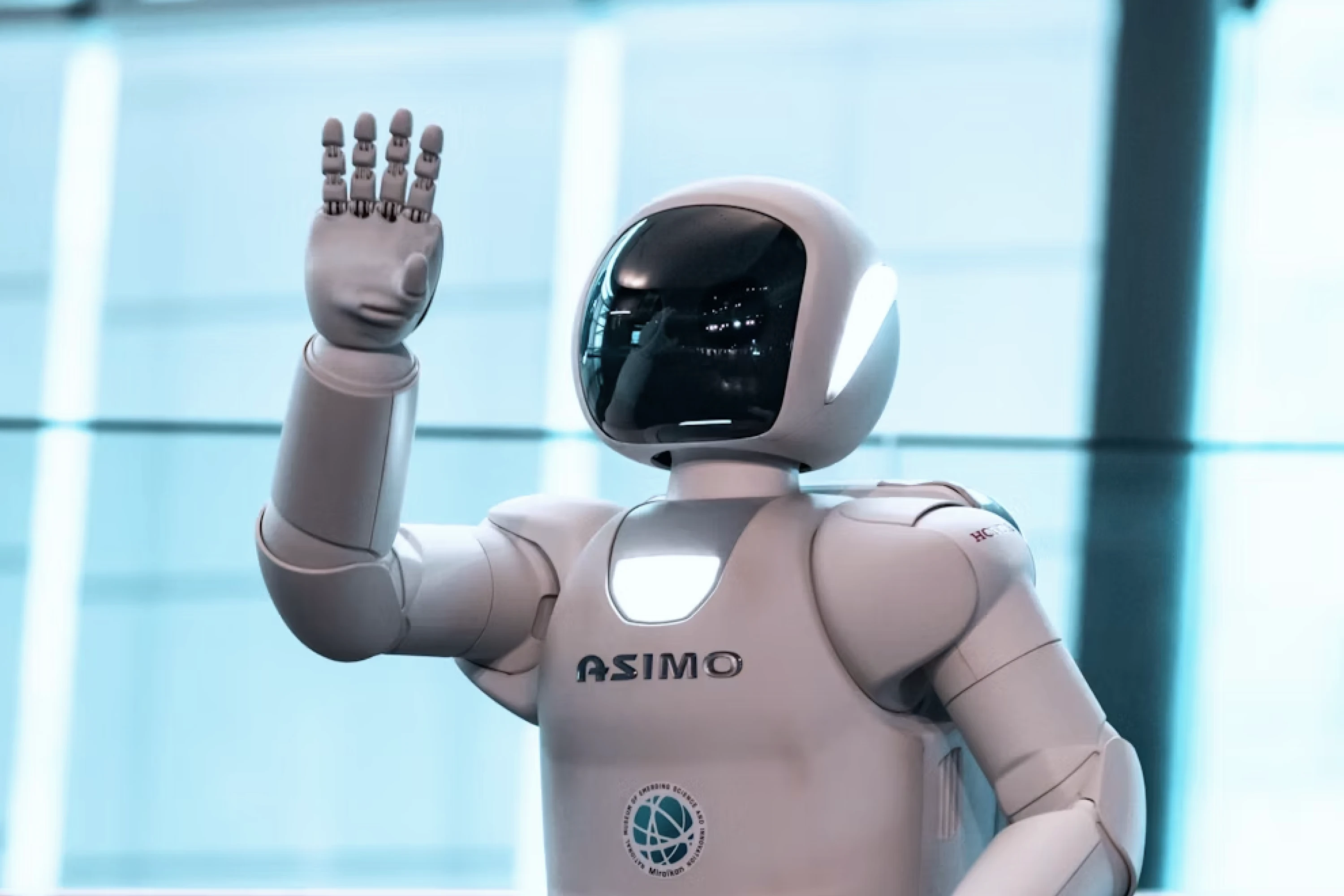
Warehouse tests of Digit-like robots, museum demonstrations with ASIMO, and social robots in healthcare settings all encountered new safety challenges once deployed.
Traceability and iterative validation turn these lessons into scalable safety improvements, supported by modern advisory frameworks and testing platforms. For a foundational overview, see our humanoid robot compliance primer.
Key Points
- Conduct small, iterative field pilots—using telemetry to spot stability gaps, sensor blind spots, and unpredictable human behavior—before wide humanoid robot deployments.
- Anchor safety on formal risk assessments and current standards (ISO 12100/10218, ISO/TS 15066, ANSI/A3 R15.06-2025, UL 3300), which regulators and auditors expect during trials.
- Build functional safety in: dual-channel circuits, speed & separation monitoring, and context-specific safe states (e.g., controlled kneel instead of toppling) triggered by faults or low perception confidence.
- Adopt emerging safeguards—redundant perception, learning-based balance controllers, wireless e-stops, and privacy-by-design data limits—to handle varied terrain, crowds, and regulatory privacy rules.
- Plan early for third-party certification and agency oversight (Occupational Safety and Health Administration (OSHA), FTC, Consumer Product Safety Commission (CPSC)); use structured checklists and traceable documentation to map every hazard to evidence of control.
Safety In Robotics
Safety in robotics begins with comprehensive risk assessment across the product life cycle.
Teams identify potential hazards, rank their severity and likelihood, and document corresponding controls based on standards such as ISO 12100 from the International Organization for Standardization (ISO).
Fail-safe behavior must account for real human behavior, not idealized models.
A sidewalk pilot revealed that a robot’s full-stop reaction can still cause harm if a person is already moving around it, showing how unpredictable human actions can undermine neat lab assumptions.
In the United States, oversight depends on context:
- Workplace pilots: Governed by OSHA, focusing on employee safety and equipment operation standards.
- Consumer-facing robots: Monitored by the FTC for privacy compliance and by the CPSC for physical safety and product reporting; workplace pilots follow OSHA robot standards.
- Voluntary standards: Used to earn public trust, support field trials, and prepare for audits and certification processes.
These oversight systems and standards work together to guide safe development, testing, and deployment of humanoid robots in both workplace and public settings.
Humanoid Robot Safety Rules
Humanoid robot safety rules require field-ready checklists rather than simple labels.
ISO/TS 15066 defines contact force limits by body area and establishes power and speed guidelines to keep incidental contact below pain thresholds.
Effective safety design also depends on how robots share spaces with people.
Speed and separation monitoring, safety-rated monitored stops, and emergency stops must be clearly defined for mixed human-robot workspaces and public areas. These controls originate from collaborative application practices, not from the robot alone.
Untrained bystanders further shape what is acceptable in real environments.
Social and cultural norms for personal space, visible intent cues, and predictable motion patterns become critical, especially around children, older adults, or individuals using mobility devices.
Functional Safety For Humanoids
Functional safety for humanoid robots involves explicit, documented requirements that prevent hazardous failures.
These requirements must be backed by evidence from design, testing, and validation activities. Industry standards provide guidance on defining safe states and verifying safety functions. See how mechatronics and safety governance co-evolve to support these functions.
The updated ANSI/A3 R15.06-2025 standard from the American National Standards Institute (ANSI) and the Association for Advancing Automation (A3) emphasizes system-level responsibilities for industrial and collaborative robots.
In practical terms, functional safety for humanoids includes:
- Dual-channel safety circuits: To ensure redundancy in case of electrical or component failures.
- Sensor integrity targets: Aligned with functional safety norms to detect and mitigate perception errors.
- Defined safe-state behavior: Enabling robots to perform controlled stops or kneeling actions when perception confidence drops or a joint fault occurs, preventing toppling and supporting graceful degradation.
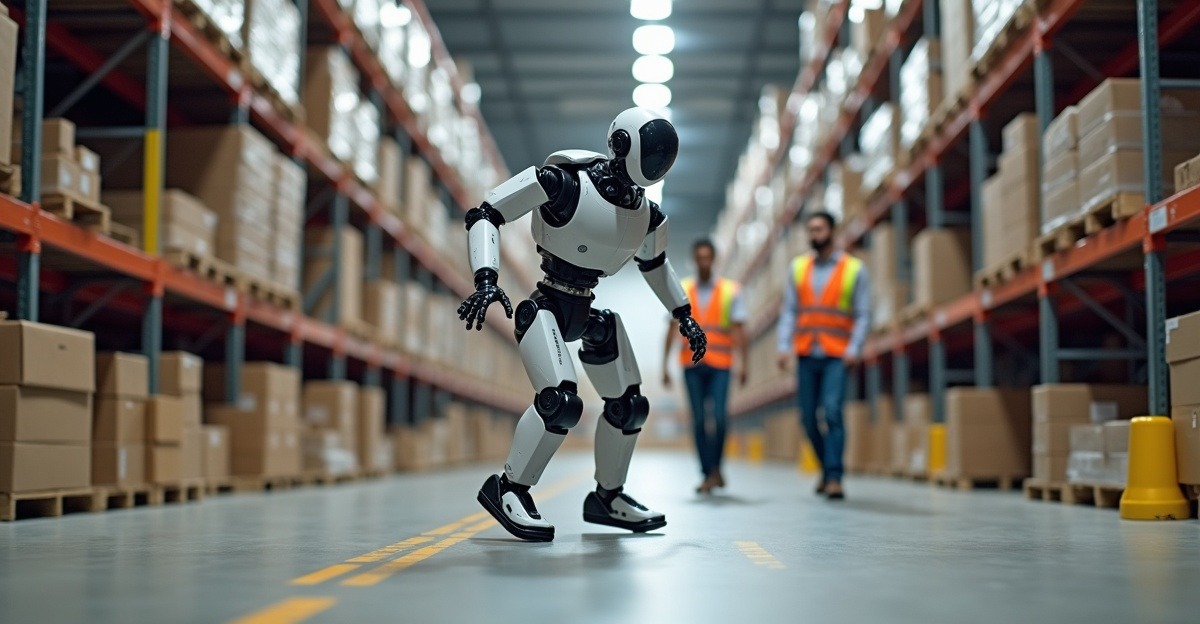
Warehouse pilots of Digit-like systems highlight why these measures matter.
Designed to operate in shared human spaces without major infrastructure changes, these robots depend on redundancy and safe-state behavior to prevent incidents during routine tasks such as tote transfers.
Humanoid Robot Field Safety Frameworks
Translating standards into action requires practical safety frameworks tailored for humanoid robot field trials.
Teams can map hazards to controls using ISO 12100 for general risk assessment, ISO/TS 15066 for collaborative interaction limits, and task-based templates commonly used by integrators.
Structured documentation helps ensure traceability and readiness for audits.
- Checklists and toolkits: Being safe around collaborative and versatile robots (COVR) resources help scope tasks, assess exposure, and document tests in certification-ready form, linking every requirement to evidence.
- Traceability systems: Consistent documentation supports version control and verification as systems evolve.
A disciplined pilot flow reinforces safety and learning:
- Form a hypothesis about risk.
- Simulate the scenario.
- Run a controlled lab stage.
- Conduct a limited field pilot.
- Review telemetry data.
- Iterate controls and code.
Field pilots, such as Honda’s sidewalk trials, reveal how people move in ways that lab environments cannot predict, helping refine both technical safeguards and human interaction rules.
Global Safety Standards
U.S. startups operate under a layered set of global safety standards that shape humanoid robot design and deployment.
- Industrial and collaborative robots: ISO 10218 and ISO/TS 15066 define how robots and humans can safely share workspaces, while the ANSI/A3 R15.06-2025 standard aligns U.S. practices with current international risk concepts.
- Service and personal care robots: Standards such as UL 3300 and ISO 13482 outline safety and conformity requirements for consumer-facing robots.
- Functional safety integrity: Many certification pathways rely on IEC 61508 principles for defining and verifying safety integrity levels.
Ongoing initiatives by IEEE and ASTM International (ASTM) are shaping humanoid-specific frameworks and paving the way for harmonized global standards. For what’s next, explore the future of humanoid compliance.
Teams that build to current frameworks using modular documentation will find future compliance far easier, requiring updates to references, not full rewrites.
Contextual Safety Standards
Context determines how safety controls are applied, making contextual standards essential for real-world deployments.
- Industrial settings: In warehouses with trained staff and defined zones, task scope and operating procedures anchor risk and safety protocols.
- Public environments: On sidewalks or in open spaces with untrained bystanders, clear intent signaling, predictable motion, and conservative speeds help reduce surprise and confusion.
- Healthcare and elder care: Accessibility and dignity take priority. Social robots in these settings rely on voice tone, gaze direction, and positioning to support comfort and safety for vulnerable users.
Design choices should always reflect context. Speed limits, human-robot interaction cues, sensor redundancy, and visible consent signage must adapt based on who is nearby and what tasks are being performed.
Museum demonstrations like ASIMO’s effectively used gaze and pointing to communicate intent in crowds – a valuable approach for service robots that act as guides or greeters.
Industrial Automation Safety
Industrial automation safety provides proven foundations that now extend to humanoid robots.
Lockout and tagout interfaces, well-defined fenced and collaborative zones, and integrator training remain central to maintaining safe operations on factory floors.
Collaborative safety techniques developed for industrial robots also apply to humanoid systems. Contact force limiting, as well as speed and separation monitoring, are essential when bipedal robots handle totes or perform machine-tending tasks near people.
Workplace pilots fall under OSHA robot standards oversight, while third-party certification from organizations such as UL Solutions helps employers, buyers, and insurers evaluate risk before deployment.
Emerging Safety Technologies
New safety technologies are improving how humanoid robots perform in unpredictable, real-world settings.
These innovations strengthen stability, perception, and control while supporting compliance and public trust. Recent advances include:
- Balance and recovery systems that use redundant inertial measurement units (IMUs) and adaptive ankle or hip strategies to maintain stability after slips or trips. Learning-based controllers have shown reliable get-up behaviors across concrete, grass, slopes, and snow.
- Cross-validated perception that fuses light detection and ranging (LIDAR), vision, and ultrasonics with Safety Integrity Level (SIL) targets to reduce single-sensor blind spots. Edge-case detection allows robots to slow or stop when behavior falls outside training data, though overly cautious full stops can cause new hazards in crowded areas.
- Privacy-aware control features such as wireless emergency stops, on-device inference, and strict data minimization, which align with emerging expectations around data collection and retention for both industrial and consumer robots (FTC action).
Telemetry collected between pilot phases helps teams harden models, refine safeguards, and continuously improve field performance.
Academic Contributions To Safety
Academic research continues to shape real-world humanoid robot safety, turning theory into field-tested practices. Key contributions include:
- Human–robot interaction (HRI) limits: ISO/TS 15066’s body-area pain thresholds form the foundation for contact force limits used in collaborative robot applications.
- Learning-based stability: Studies show improved balance and recovery using controllers trained in simulation and transferred to physical robots across diverse terrains. Platforms like Isaac Sim and Isaac Gym accelerate this simulation-to-field loop.
- Human factors insights: Research in HRI highlights how perception, timing, and motion cues affect trust and safety outcomes, guiding design decisions for more intuitive behavior.
Together, these academic advances continue to inform standards, safety frameworks, and design choices for humanoid robots operating in human environments.
Conclusion
Humanoid robot field safety is achieved through real-world deployments that uncover hidden risks and drive better designs. Field trials demonstrate how standards, telemetry, and iterative validation strengthen both performance and public trust.
The way forward is clear. Apply current frameworks, pursue independent certification, and use each incident as feedback to improve safety controls. Avoid common humanoid compliance pitfalls to de-risk early pilots.
As IEEE and ASTM continue developing humanoid-specific guidance, teams that view compliance as a strategic advantage will lead with confidence and credibility.