.svg)

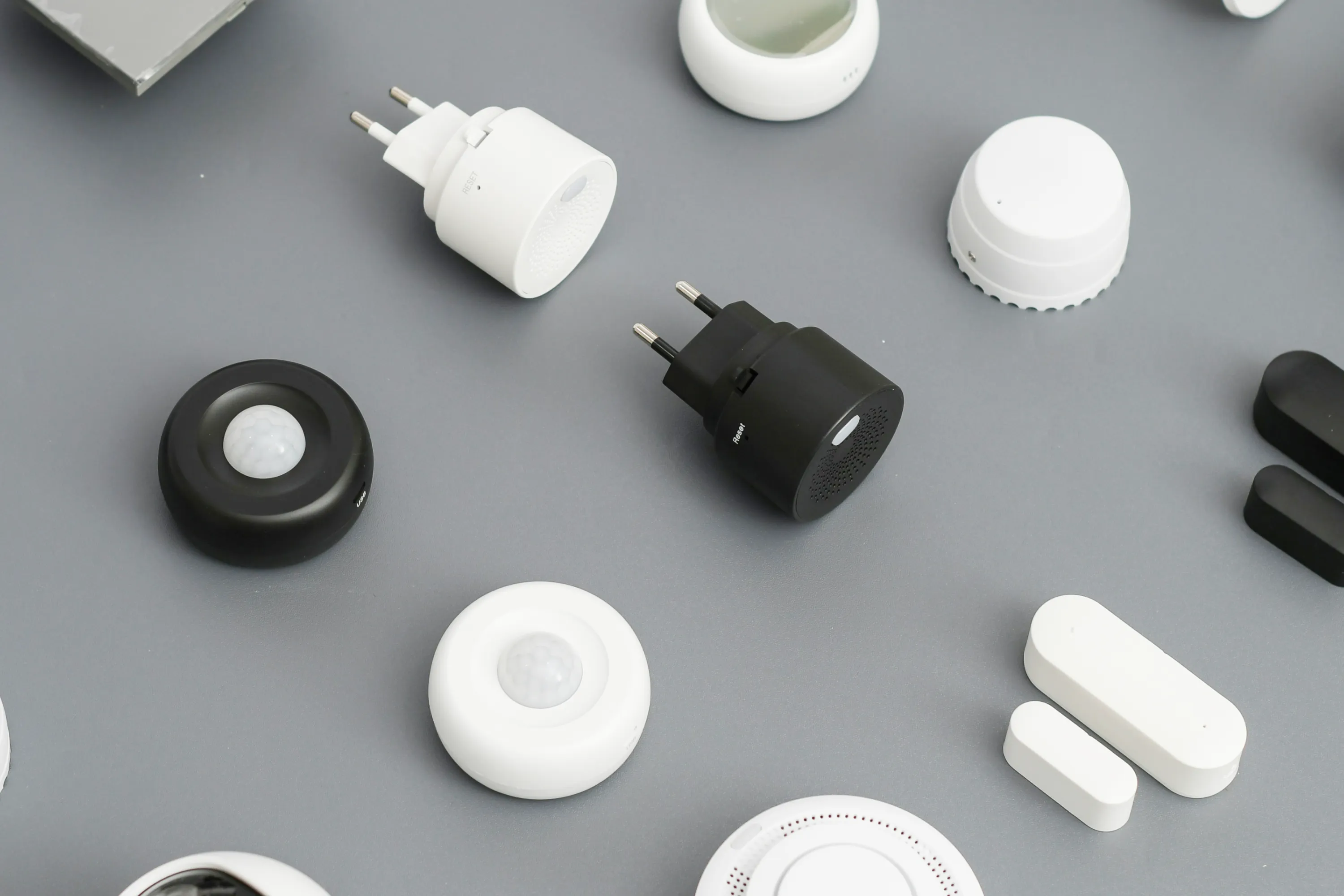

Consumer Electronics Compliance at a Glance
Many new electronic devices fail electromagnetic-interference (EMI) tests on the first try—industry estimates range from 50% to over 90%—often leading to costly redesigns and delays.
To prevent these setbacks, this guide maps the three regulatory pillars of consumer electronics compliance: safety, electromagnetic compatibility (EMC), and environmental stewardship.
It also explains who enforces these rules and why U.S. retailers require formal certification or compliance documentation before accepting products.
Each section provides a concise overview so you can identify potential risks early and explore deeper guidance as needed.
Key Points
- Secure recognized safety marks (e.g., Underwriters Laboratories (UL) via a Nationally Recognized Testing Laboratory (NRTL)) before launch—retailers and insurers treat uncertified products as unsellable and recalls can cost tens of millions.
- Design to the hazard-based International Electrotechnical Commission (IEC) 62368-1 standard from day one; it has replaced legacy 60950/60065 rules and upcoming Edition 4 will tighten requirements on batteries, wireless charging, and functional safety.
- Integrate compliance engineers early in schematic and layout stages to cut first-pass EMI failures (currently ~90%) and avoid $5k–$30k retest expenses per stock-keeping unit (SKU).
- Select test labs strategically: verify International Organization for Standardization (ISO) 17025/NRTL accreditation, review lead times and first-pass rates, and insist on raw data to manage multi-regulation projects efficiently.
- Prepare for future pressures—stricter radio frequency (RF) emissions, expanded eco-design (Restriction of Hazardous Substances (RoHS)/Registration, Evaluation, Authorisation and Restriction of Chemicals (REACH)) mandates, and retailer-imposed “voluntary” marks—by building scalable compliance processes now.
Core Safety Concepts in Consumer Electronics
Electronics safety compliance is the legal and commercial gatekeeper for U.S. hardware.
A product must prove it will not shock, overheat, or catch fire before anyone can import it, insure it, or place it on shelves.
UL marks—issued by one of North America’s NRTLs—are among the most widely recognized proof of product safety conformity in North America.
Globally, the IEC publishes harmonized standards that engineers follow from the earliest design stages
In practice, enforcement involves several layers of regulation and review, from federal agencies to retail gatekeepers..
The Consumer Product Safety Commission (CPSC) can issue recalls and civil penalties for unsafe goods. Retailers add another line of defense by refusing to stock items lacking recognized safety marks, turning “voluntary” listings into de facto mandates.
Failures are costly: Anker’s recall of over one million PowerCore 10000 power banks exposed the company to at least $34 million in direct expenses, excluding unquantifiable brand damage.
Starting with safety therefore minimizes financial, legal, and reputational risk before a single unit ships.
Tracing the Evolution of Modern Safety Standards
The evolution of IEC 62368-1 rewrote electronics safety by merging two legacy documents—IEC 60950-1 (information technology (IT) equipment) and IEC 60065 (audio-video)—into one hazard-based, technology-agnostic framework.
Early editions appeared in 2010, but the real tipping point came when the European Union set December 20, 2020 as the “no-grandfathering” deadline: every product entering the bloc had to meet EN 62368-1, regardless of prior approvals. Manufacturers serving multiple markets quickly followed suit to avoid fragmented inventories.
As the standard matured, each new edition sharpens clarity on batteries, energy sources, and user scenarios. Recent editions of relevant standards have introduced stronger requirements for wireless charging and lithium-ion cells, with newer drafts aligning with functional-safety principles.
Understanding this timeline helps teams future-proof designs instead of chasing last-minute updates.
Applying IEC 62368-1 Requirements in Product Design
IEC 62368-1 is built on hazard-based safety engineering (HBSE) principles. Instead of prescribing fixed construction rules such as creepage distances, the standard requires engineers to:
- Identify energy sources (electrical, thermal, mechanical)
- Classify each source’s potential injury level
- Apply safeguards—such as insulation, fire enclosures, or protective circuits—proportionate to the risk
Documentation is critical.
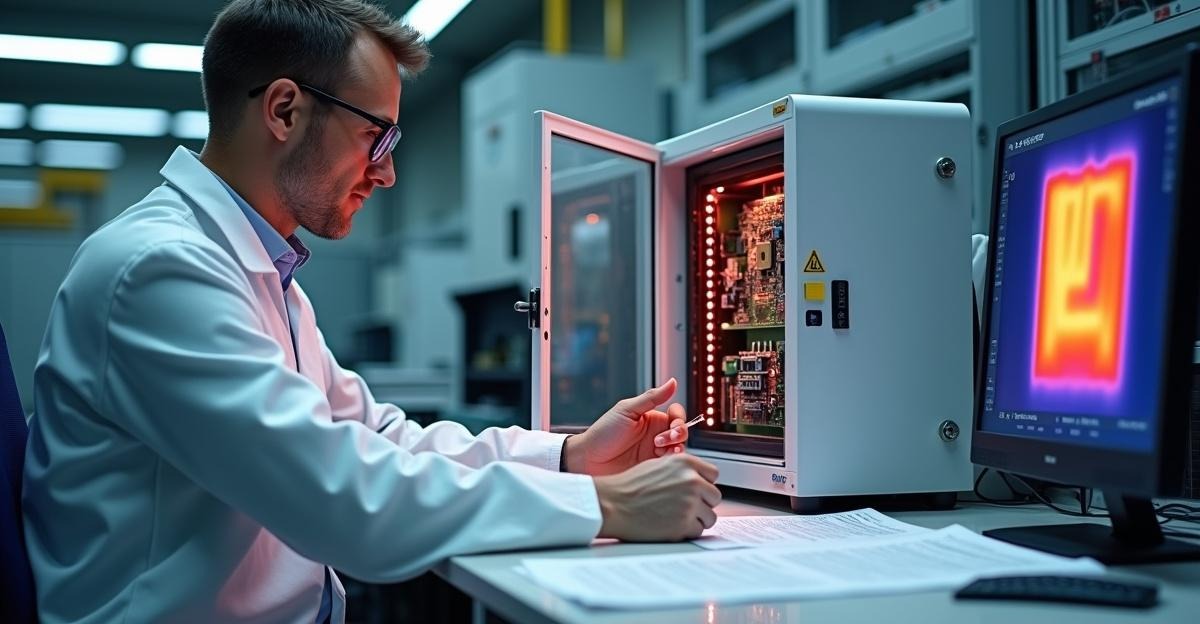
Test labs expect clear risk assessments, Bill-of-Materials traceability, and evidence that firmware controls (for example, over-temperature shutdown) are fail-safe. Common failure points include battery overheating, inadequate clearance on high-density boards, and incomplete labeling.
Aside from documentation, early design reviews save money.
Intertek notes that lack of EMC knowledge and unexpected interactions among circuit elements are leading causes of re-test failures, which increase costs and delay product launches. Bringing compliance engineers into schematic and layout phases typically costs less than one failed lab cycle.
Working with Test Lab Partners
Choosing testing partners for IEC 62368-1 is a strategic decision, not a checklist chore.
Accredited NRTLs offer globally recognized safety marks, yet their business model often centers on testing throughput. On the other hand, independent advisors challenge designs earlier, negotiate test plans, and interpret gray areas—often cutting total certification time.
When vetting a partner, ask:
- Accreditation scope: Do they hold NRTL certification for your product category, as required for safety compliance in the U.S.?
- **Performance metrics:**What are typical lead times and first-pass success rates?
- Integration capability: Can they handle multi-regulation projects (safety, EMC, RoHS) under a single test plan?
- **Transparency:**Will they share raw data, not just pass/fail summaries?
The market underscores the need for expertise: U.S. safety-testing services already top $7 billion and are growing steadily.
Kite’s perspective is simple—treat labs as partners but keep strategy in-house, using independent guidance to turn compliance from a bottleneck into a launchpad.
What’s Next? Emerging Themes & Regulations
The future of electronics compliance is accelerating on four fronts.
- Global Safety Convergence – Edition 4 of IEC 62368-1 expands hazard-based safety engineering concepts, encouraging designers worldwide to adopt a risk-based approach to product safety.
- Evolving RF Regulations – As the Federal Communications Commission (FCC) and other regulators manage increasing spectrum demand, expect ongoing updates to spurious-emission limits and new rules for Internet of Things (IoT) device compliance.
- Eco-Design & Environmental Responsibility – Sustainability is now integral to compliance. Eco-design initiatives complement substance bans such as RoHS and REACH by promoting energy efficiency, recyclability, and full lifecycle impact assessments.
- Market-Driven Certification Pressures – Retailers and distributors increasingly require suppliers to meet safety (UL, Electrical Testing Laboratories (ETL)) and energy-efficiency (ENERGY STAR) standards. These “optional” certifications have effectively become prerequisites for market access.
Together, these shifts mark a new era of integrated compliance – where safety, sustainability, and market readiness are no longer separate goals but interconnected pillars of successful product design.
Conclusion
Consumer electronics compliance isn’t a barrier – it’s a way to build trust and reach more markets.
Safety, EMC, and environmental rules work together to show a product is ready for global sale. By planning early and getting the right guidance, manufacturers can turn compliance checks into launch advantages—building safer, more reliable products without unexpected delays. Explore Kite resources to keep momentum.